
Few things in space are as sloppy as a solar system—and few solar systems are as sloppy as ours. That can be a very good thing if you like cosmic sky shows, because now and again, the familiar nighttime heavens can change in dramatic ways. Monday will be one of those times, when Mars makes an unusually close pass by Earth, drawing nearer—and looming larger—than at any time since 2005.
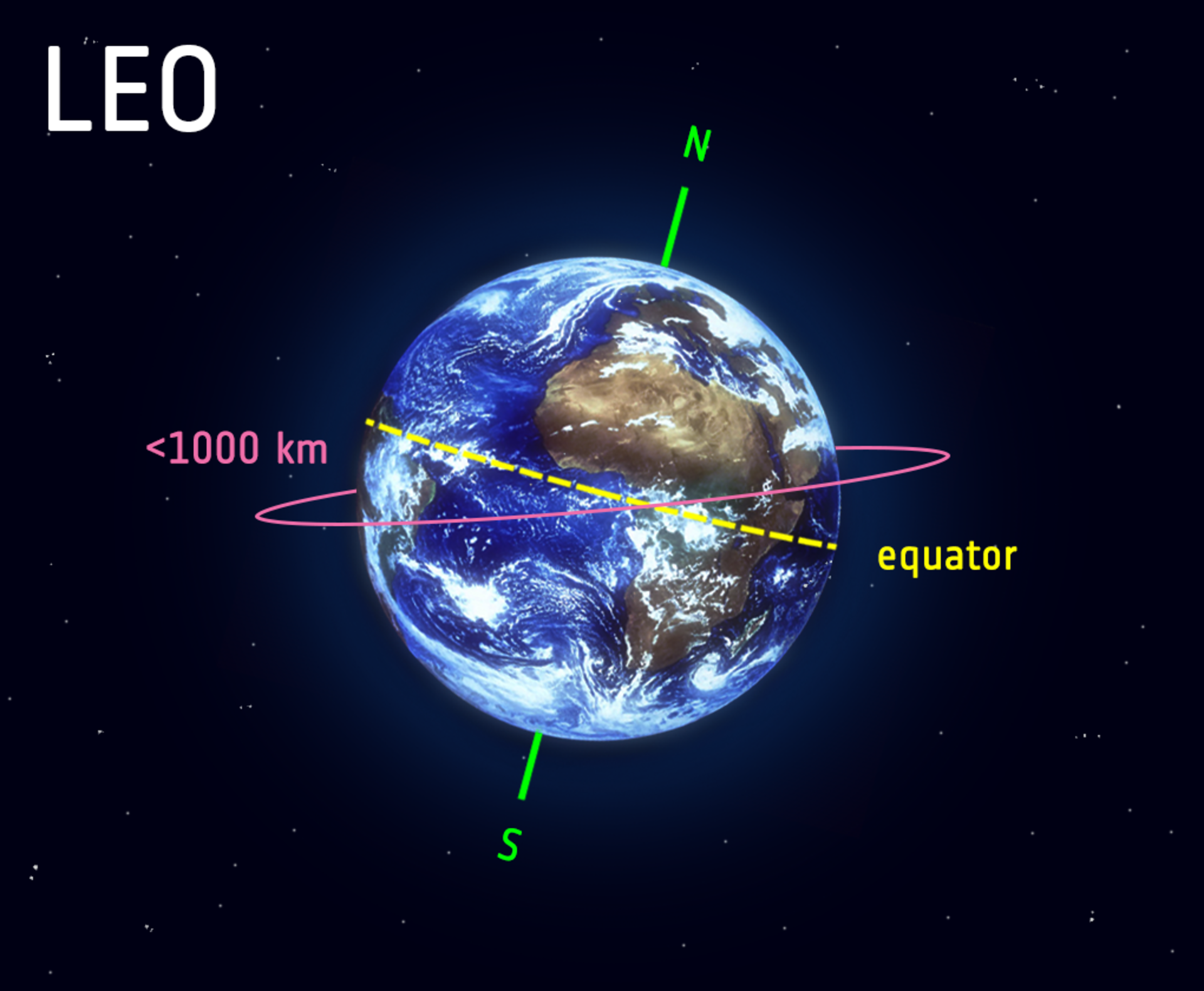
Two medium Earth orbits are notable: the semi-synchronous orbit and the Molniya orbit. The semi-synchronous orbit is a near-circular orbit (low eccentricity) 26,560 kilometers from the center of the Earth (about 20,200 kilometers above the surface). A satellite at this height takes 12 hours to complete an orbit. Our planet, Earth, travels in a slightly flattened circular path called an orbit around the Sun. It takes one year (365¼ days) for the Earth to complete one circuit. At the same time, the Earth is constantly spinning around on its axis, an imaginary line running through the center of the Earth from the North Pole to the South Pole. The earth holds the moon in orbit through the gravitational force, but how much force does the moon apply to the earth? The Veritasium video applies Newton's Third Law of Motion to this question. After interviewing people and hearing.
Here’s what’s behind the cosmic coziness:
The orbit any planet makes around its parent star is fixed and knowable. Earth takes 365.256 days to make a single lap around the sun. (The 365 part is how we measure our year, and the .256 is why we tack on an extra day at the end of February every four years.) For Mars, a year is 686.93 days. For Neptune—well, a single Neptunian year takes 164.79 Earth years.
Those different orbital speeds mean that the distance between any two planets is always changing. As Earth zips around in the solar system’s No. 3 lane, for example, it sometimes finds itself on the complete opposite side of the sun from Mars, putting the two planets as much as 249 million miles (401 million km) apart. Every other year, however, Earth laps Mars, overtaking its pokier sister and bringing the two planets briefly as close as 33.9 million miles (54.6 million km). It’s during those biannual windows that NASA typically launches its missions to Mars, keeping the travel time from one planet to the other to a minimum.
Not all close encounters between Earth and Mars are equal, however. Few planets in any solar system orbit their suns in a perfect circle. Instead they follow a slightly egg-shaped path, which means that each orbit has a perihelion (closest approach to the parent star) and an apehelion (farthest approach). Mars’ closest approach to the sun is 128.4 million miles (206.6 million km) and its furthest is 154.8 million mi. (249.2 million km). For Earth, the perihelion is 91.4 million miles (147.1 million km) and the apehelion is 94.5 million miles (152.1 million km).
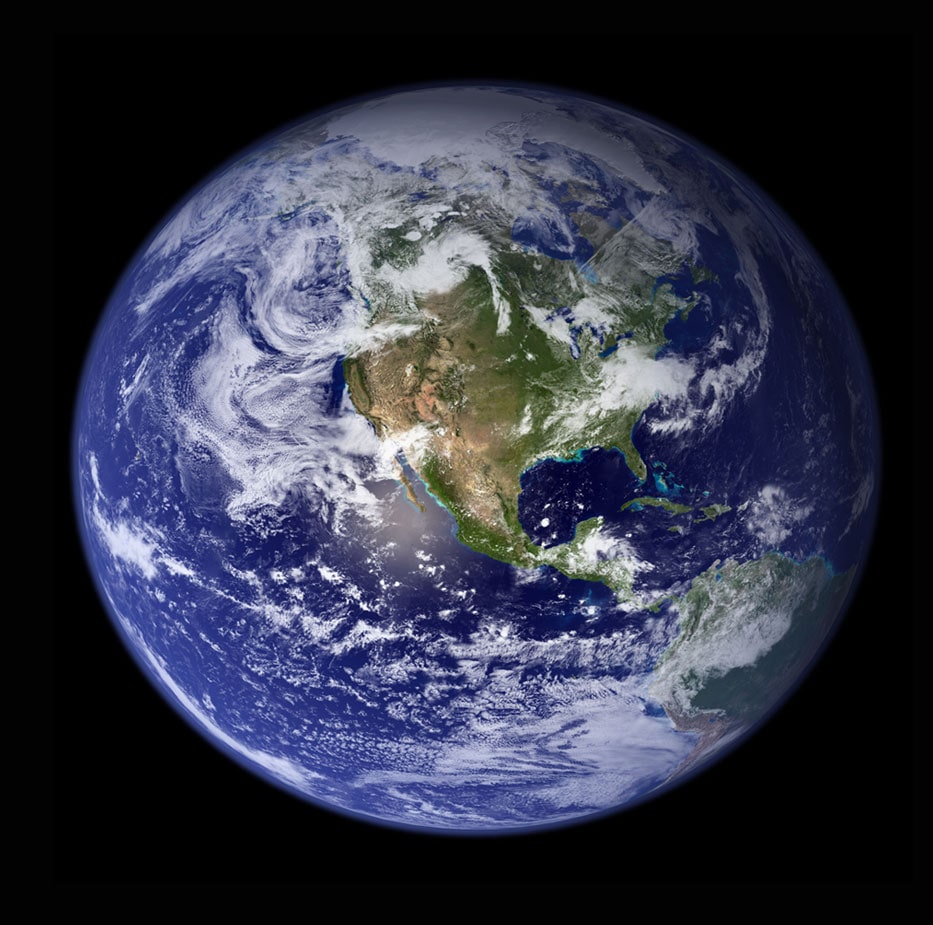
And things get messier still. Planets don’t typically orbit perfectly in the flat, circling neatly around a star’s equator. Most are slightly inclined relative to that midline, moving above their sun’s equatorial plane at one part of their orbit and below it at another. Mars’ orbit is inclined 5.65 degrees relative to the Sun’s equator; Earth’s is a slightly more drunken 7.155 degrees.
For two planets to make an especially close approach like Mars and Earth are about to do, it means that the inner planet (Earth in this case) must be in its apehelion phase (cheating a bit away from the sun) when it passes Mars; and that Mars must be in its perihelion phase (cheating in). It also means that the planets must be close to one another in inclination to the sun, with both above the solar equator or both below it.
All of that is now lining up, with Mars and Earth set to pass each other at a relative shouting distance of 46.8 million miles (75.3 million km) on Monday, and even casual skywatchers will notice the difference without the aid of a telescope. Most of the time, Jupiter is the brightest object in the nighttime sky after the moon, but Mars will rival it in brilliance until June 3.
If you like what you see this week, you’ll love it in 2018—on July 27 of that year specifically. Mars is approaching the low point in its perihelion cycle now, but it’s not quite there yet, and Earth will have sped past already when it does reach that nadir. In 2018, we’ll pass Mars when it’s closer still to that low point, bringing the two planets just 35.8 million miles (57.6 million km) apart—about 24% closer than they’ll be this week.
And that is plenty close, thank you very much. About 4.5 billion years ago, the primordial Earth suffered a near-death experience when a rogue Mars-sized planetesimal collided with it, sending up a debris cloud that is thought to have been the raw material for the moon. The actual Mars is not about to jump its orbital lane and come careering our way.
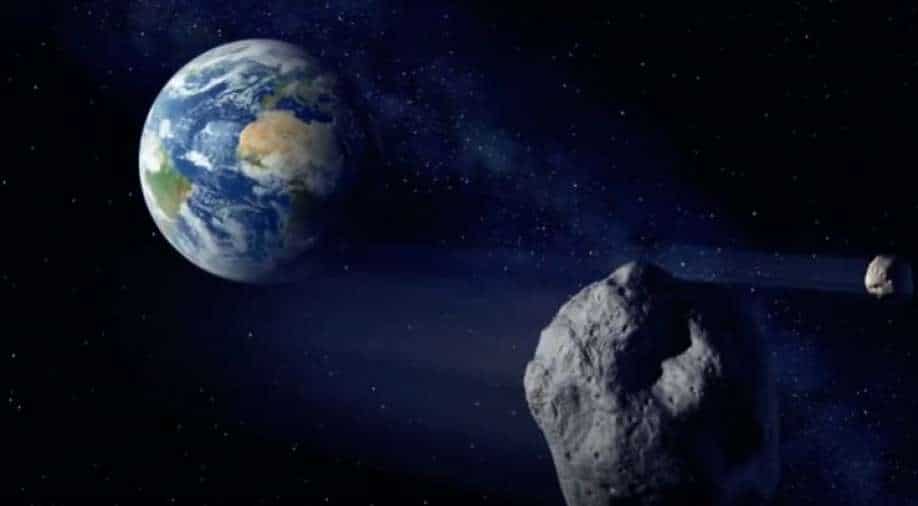
But in a solar system born in violence, it’s always nice if very close encounters never become too close.
Get our Space Newsletter. Sign up to receive the week's news in space.
Thank you!
For your security, we've sent a confirmation email to the address you entered. Click the link to confirm your subscription and begin receiving our newsletters. If you don't get the confirmation within 10 minutes, please check your spam folder.Our lives literally revolve around cycles: series of events that are repeated regularly in the same order. There are hundreds of different types of cycles in our world and in the universe. Some are natural, such as the change of the seasons, annual animal migrations or the circadian rhythms that govern our sleep patterns. Others are human-produced, like growing and harvesting crops, musical rhythms or economic cycles.
Cycles also play key roles in Earth’s short-term weather and long-term climate. A century ago, Serbian scientist Milutin Milankovitch hypothesized the long-term, collective effects of changes in Earth’s position relative to the Sun are a strong driver of Earth’s long-term climate, and are responsible for triggering the beginning and end of glaciation periods (Ice Ages).
Specifically, he examined how variations in three types of Earth orbital movements affect how much solar radiation (known as insolation) reaches the top of Earth’s atmosphere as well as where the insolation reaches. These cyclical orbital movements, which became known as the Milankovitch cycles, cause variations of up to 25 percent in the amount of incoming insolation at Earth’s mid-latitudes (the areas of our planet located between about 30 and 60 degrees north and south of the equator).
The Milankovitch cycles include:
- The shape of Earth’s orbit, known as eccentricity;
- The angle Earth’s axis is tilted with respect to Earth’s orbital plane, known as obliquity; and
- The direction Earth’s axis of rotation is pointed, known as precession.
Let’s take a look at each (further reading on why Milankovitch cycles can't explain Earth's current warming here).
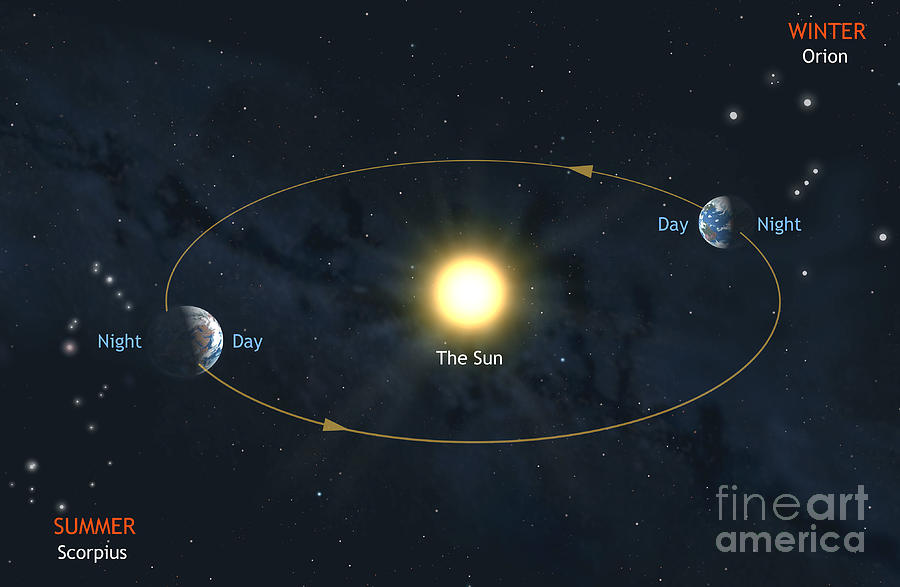
Eccentricity – Earth’s annual pilgrimage around the Sun isn’t perfectly circular, but it’s pretty close. Over time, the pull of gravity from our solar system’s two largest gas giant planets, Jupiter and Saturn, causes the shape of Earth’s orbit to vary from nearly circular to slightly elliptical. Eccentricity measures how much the shape of Earth’s orbit departs from a perfect circle. These variations affect the distance between Earth and the Sun.
Earth Orbit Around Sun
Eccentricity is the reason why our seasons are slightly different lengths, with summers in the Northern Hemisphere currently about 4.5 days longer than winters, and springs about three days longer than autumns. As eccentricity decreases, the length of our seasons gradually evens out.
The difference in the distance between Earth’s closest approach to the Sun (known as perihelion), which occurs on or about January 3 each year, and its farthest departure from the Sun (known as aphelion) on or about July 4, is currently about 5.1 million kilometers (about 3.2 million miles), a variation of 3.4 percent. That means each January, about 6.8 percent more incoming solar radiation reaches Earth than it does each July.
When Earth’s orbit is at its most elliptic, about 23 percent more incoming solar radiation reaches Earth at our planet’s closest approach to the Sun each year than does at its farthest departure from the Sun. Currently, Earth’s eccentricity is near its least elliptic (most circular) and is very slowly decreasing, in a cycle that spans about 100,000 years.
The total change in global annual insolation due to the eccentricity cycle is very small. Because variations in Earth’s eccentricity are fairly small, they’re a relatively minor factor in annual seasonal climate variations.
How High Is Low Earth Orbit
Obliquity – The angle Earth’s axis of rotation is tilted as it travels around the Sun is known as obliquity. Obliquity is why Earth has seasons. Over the last million years, it has varied between 22.1 and 24.5 degrees perpendicular to Earth’s orbital plane. The greater Earth’s axial tilt angle, the more extreme our seasons are, as each hemisphere receives more solar radiation during its summer, when the hemisphere is tilted toward the Sun, and less during winter, when it is tilted away. Larger tilt angles favor periods of deglaciation (the melting and retreat of glaciers and ice sheets). These effects aren’t uniform globally -- higher latitudes receive a larger change in total solar radiation than areas closer to the equator.
Earth’s axis is currently tilted 23.4 degrees, or about half way between its extremes, and this angle is very slowly decreasing in a cycle that spans about 41,000 years. It was last at its maximum tilt about 10,700 years ago and will reach its minimum tilt about 9,800 years from now. As obliquity decreases, it gradually helps make our seasons milder, resulting in increasingly warmer winters, and cooler summers that gradually, over time, allow snow and ice at high latitudes to build up into large ice sheets. As ice cover increases, it reflects more of the Sun’s energy back into space, promoting even further cooling.
Precession – As Earth rotates, it wobbles slightly upon its axis, like a slightly off-center spinning toy top. This wobble is due to tidal forces caused by the gravitational influences of the Sun and Moon that cause Earth to bulge at the equator, affecting its rotation. The trend in the direction of this wobble relative to the fixed positions of stars is known as axial precession. The cycle of axial precession spans about 25,771.5 years.
Axial precession makes seasonal contrasts more extreme in one hemisphere and less extreme in the other. Currently perihelion occurs during winter in the Northern Hemisphere and in summer in the Southern Hemisphere. This makes Southern Hemisphere summers hotter and moderates Northern Hemisphere seasonal variations. But in about 13,000 years, axial precession will cause these conditions to flip, with the Northern Hemisphere seeing more extremes in solar radiation and the Southern Hemisphere experiencing more moderate seasonal variations.
Axial precession also gradually changes the timing of the seasons, causing them to begin earlier over time, and gradually changes which star Earth’s axis points to at the North Pole (the North Star). Today Earth’s North Stars are Polaris and Polaris Australis, but a couple of thousand years ago, they were Kochab and Pherkad.
There’s also apsidal precession. Not only does Earth’s axis wobble, but Earth’s entire orbital ellipse also wobbles irregularly, primarily due to its interactions with Jupiter and Saturn. The cycle of apsidal precession spans about 112,000 years. Apsidal precession changes the orientation of Earth’s orbit relative to the elliptical plane.
The combined effects of axial and apsidal precession result in an overall precession cycle spanning about 23,000 years on average.
A Climate Time Machine
The small changes set in motion by Milankovitch cycles operate separately and together to influence Earth’s climate over very long timespans, leading to larger changes in our climate over tens of thousands to hundreds of thousands of years. Milankovitch combined the cycles to create a comprehensive mathematical model for calculating differences in solar radiation at various Earth latitudes along with corresponding surface temperatures. The model is sort of like a climate time machine: it can be run backward and forward to examine past and future climate conditions.
Milankovitch assumed changes in radiation at some latitudes and in some seasons are more important than others to the growth and retreat of ice sheets. In addition, it was his belief that obliquity was the most important of the three cycles for climate, because it affects the amount of insolation in Earth’s northern high-latitude regions during summer (the relative role of precession versus obliquity is still a matter of scientific study).
He calculated that Ice Ages occur approximately every 41,000 years. Subsequent research confirms that they did occur at 41,000-year intervals between one and three million years ago. But about 800,000 years ago, the cycle of Ice Ages lengthened to 100,000 years, matching Earth’s eccentricity cycle. While various theories have been proposed to explain this transition, scientists do not yet have a clear answer.
Milankovitch’s work was supported by other researchers of his time, and he authored numerous publications on his hypothesis. But it wasn’t until about 10 years after his death in 1958 that the global science community began to take serious notice of his theory. In 1976, a study in the journal Science by Hays et al. using deep-sea sediment cores found that Milankovitch cycles correspond with periods of major climate change over the past 450,000 years, with Ice Ages occurring when Earth was undergoing different stages of orbital variation.
Several other projects and studies have also upheld the validity of Milankovitch’s work, including research using data from ice cores in Greenland and Antarctica that has provided strong evidence of Milankovitch cycles going back many hundreds of thousands of years. In addition, his work has been embraced by the National Research Council of the U.S. National Academy of Sciences.
Earth Orbiting The Sun
Scientific research to better understand the mechanisms that cause changes in Earth’s rotation and how specifically Milankovitch cycles combine to affect climate is ongoing. But the theory that they drive the timing of glacial-interglacial cycles is well accepted.